Store architecture
Page structure and navigation designed around shopping intent, not the internal category tree, with a homepage that orients rather than decorates.

Reliable Remote Staffing
Since 2004
Amazon Brand Store & Storefront Design
A Brand Store is the one Amazon surface with no competing ads, no competitor listings and no Buy Box to lose. Sponsored Brands traffic lands there, external campaigns land there, and the store's own analytics tell you what people did next — which makes it the closest thing to a controlled landing page that Amazon offers.
StaffCloud designs and builds multi-page storefronts around how your range is actually shopped: by use case, by room, by problem, by collection — whatever matches how buyers describe what they want, rather than how your internal catalogue is organised.
The team also maintains the store. Seasonal refreshes, new collection pages, retiring pages for discontinued lines, and keeping the shoppable imagery pointed at products that are actually in stock.
Page structure and navigation designed around shopping intent, not the internal category tree, with a homepage that orients rather than decorates.
Lifestyle imagery with shoppable hotspots, category tiles and product grids built so a shopper can move from inspiration to a detail page in one step.
The brand argument told once, properly, on the one page where you control the whole viewport — then echoed consistently across A+ content.
Dedicated store pages built as destinations for Sponsored Brands and external campaigns, so paid traffic lands somewhere built for it rather than on a generic homepage.
Store traffic, dwell and sales-per-visit read monthly, with layout changes made against what the data shows rather than what the design deck preferred.
Refreshes for peak periods, new collection pages as ranges launch, and removal of pages for lines that no longer exist.
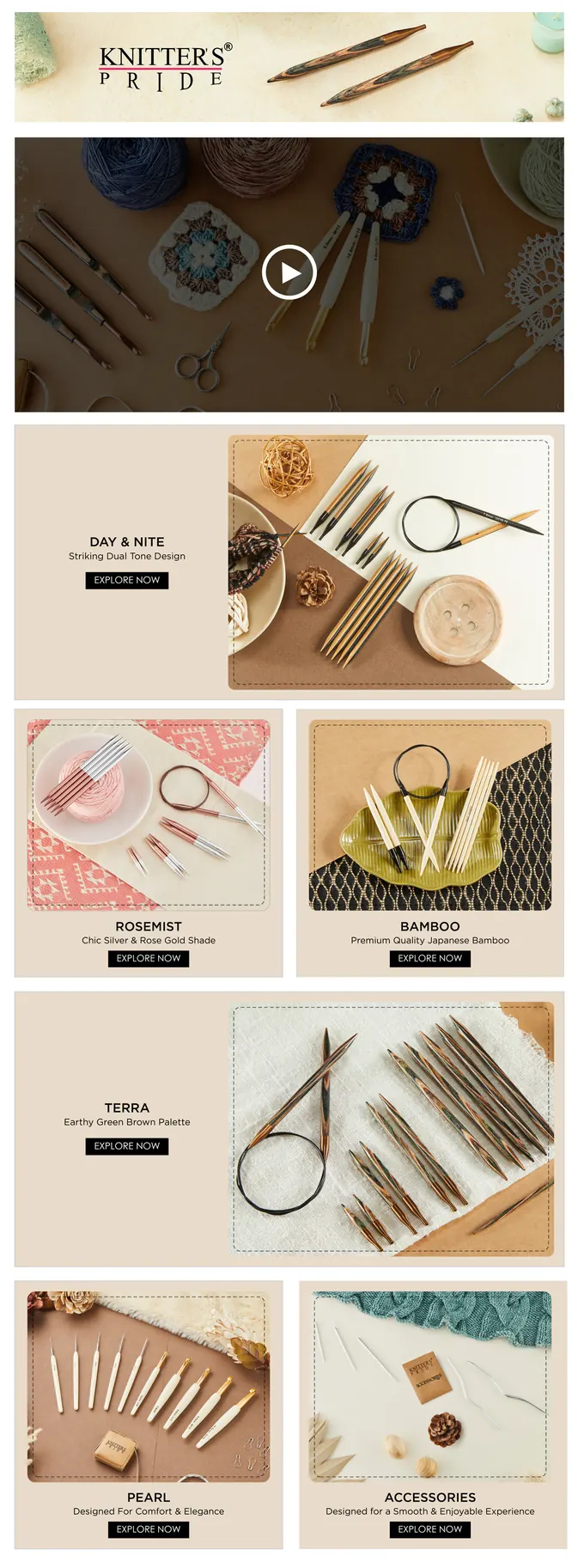
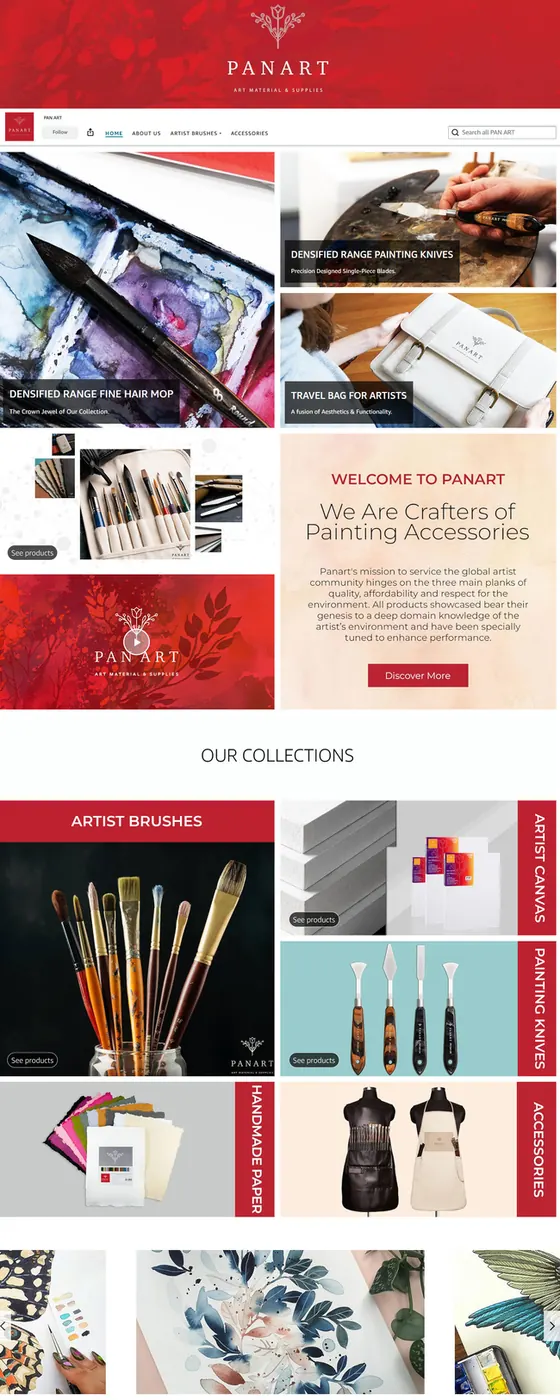
Multi-page storefronts: a masthead, a video tile, sub-category banners and a collection grid, each one a separate Amazon tile with its own asset spec. The navigation is the design decision — the tiles are what carry it.
 View full size
Masthead, video tile and a sub-category grid routing to the Day & Nite, Rosemist and Bamboo ranges, each banner carrying its own shot and an explore link.
 View full size
Full storefront with navigation, a product-range grid, an about panel and a collections row split into brushes, canvas and painting knives.
Client work is published with the client's permission. Product names and marks belong to their owners.
How the catalogue is actually shopped, which collections matter commercially, and what a first-time visitor needs to understand in the first screen.
Page tree, navigation and module sequence agreed before any imagery is produced, because layout decisions are cheap at this stage and expensive later.
Imagery produced, tiles and shoppable modules built, pages assembled in the Store Builder and checked at phone width.
Submitted for review, published, then reviewed against store insights with changes made on a standing cadence.
Every other Amazon surface is shared with competitors. This one is not — and it is where brand advertising spend lands.
The pod works inside your stack. These are the systems this team uses day to day — if yours is not listed, we will learn it.
The things worth knowing before the first call.
Describe the workload in a sentence and we will point you at the right team — or tell you honestly if it is not something we should take on.
Ask usThe build itself takes days once the structure and imagery are agreed. Agreeing them is the longer part, and rightly so — that is where decisions about what the store should do for your brand get made. Amazon's own review before publishing adds a further wait that nobody controls.
StaffCloud will give you a realistic schedule that accounts for all three stages rather than quoting only the production time.
Not always, but you do need usable source material. Existing product and lifestyle photography can usually be adapted into store tiles and modules by our design team. Where a collection has nothing beyond a plain white-background product shot, the store will look like a catalogue page, and no layout choice will fix that.
StaffCloud will review what you have before the build and tell you where new photography would make a real difference.
Yes, and it is one of the better uses of a Brand Store. A landing page built for a specific audience or campaign converts better than sending that traffic to your store homepage, and the store's own analytics will show you the difference.
StaffCloud builds the page, sets up the tracking so results are attributable, and reports on how it performed against the homepage.
Whoever you prefer. Most brands keep a StaffCloud team on a light maintenance scope for seasonal refreshes and new collection pages. The common failure with Brand Stores is one that looked excellent on launch day and is still showing discontinued products two years later.
A small ongoing scope keeps the store current for a fraction of what a rebuild costs.
Not directly — a Brand Store is not indexed for search the way a product detail page is, and we would not sell it to you on that basis.
Its value is conversion and control: it is the one surface on Amazon where you can make your brand's argument without a competitor's advertising sitting next to it. That is worth having, but it is a different benefit from ranking.
Four things: Brand Registry enrolment, access to the store builder, your brand assets, and a decision about which collections matter most. If Brand Registry is not yet in place, that becomes the first piece of work, and it is something StaffCloud can help you complete.
We will confirm what is missing during scoping so nothing stalls halfway through the build.
Tell us the workload
We will map the roles, the hours and the cost, and come back within one working day.
Or submit an enquiry — the full form, with a service line